Thursday, September 20, 2018

Removing Invasive Seaweed Around Channel Islands National Marine Sanctuary

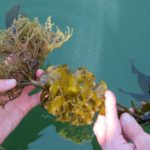
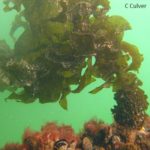
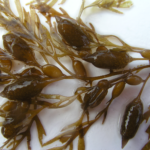
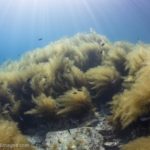
There’s an invasion beneath the waves at Channel Islands National Marine Sanctuary. It’s not an alien invasion — although the invaders themselves are green. Sargassum horneri, an invasive seaweed from Japan, has been replacing native algae in the sanctuary since 2009. In the past six years, its prevalence has shot through the roof. With this seaweed sprawling over the seafloor, who’s the sanctuary going to call?

They call Dr. Nancy Foster Scholar and “underwater landscaper” Lindsay Marks. For her PhD at the University of California, Santa Barbara, Marks extensively studies the fundamental ecology of S. horneri to try and predict how its growing presence will affect the ecosystem in Southern California.

Invasive seaweed is flourishing

According to Marks, S. horneri has several characteristics that make it a “really great invader.” It reproduces and matures quickly and can also self-fertilize to reproduce faster. If the parent plant gets dislodged, it can easily drift long distances and drop offspring as it floats along. The invasive algae can also thrive at depths where other species do not.

While the species living within ecosystems can change naturally, invasive species change the abundance and diversity of the native species. This change can leave an ecosystem less stable, which in turn can impact its economic benefits (like serving as a nursery for juvenile fish) and recreational offerings (like acting as an intriguing dive site). S. horneri is no exception.

Averaging 10 feet tall, S. horneri is shorter than the 60-foot native giant kelp (Macrocystis pyrifera) and cannot provide the same extensive habitat giant kelp does. Giant kelp houses several species in its canopies, including the valuable kelp bass. If S. horneri continues to replace the native seaweed, these kelp forests will look very different.

It does not taste good to herbivores like sea urchins, it grows really fast, and it reproduces like gangbusters,” says Marks. How, then, can the sanctuary stop S. horneri from spreading?

Tackling the problem

Marks tests how effective it is to remove the invader at Santa Catalina Island, just outside the Channel Islands National Marine Sanctuary. This is one of the first places S. horneri became really abundant. In 2016, Marks removed seaweed before the reproductive season and not only did she see a 25 percent reduction in the adult population, but she also saw a 50 percent reduction in new S. horneri plants.

While removal as a management strategy seems promising, the 2016 El NiƱo year tells a different story. The warmer waters it brought to Southern California favor the invasive seaweed, and the corresponding increase in S. horneri may provide a glimpse into future ocean conditions. With the steady increase of sea-surface temperatures, it is possible that the invasive seaweed will start to engulf the sanctuary, even with removal efforts.

Reason for hope

There is still a reason for ocean optimism. Long-standing marine-protected areas and no-take reserves, like those within Channel Islands National Marine Sanctuary, are more resilient to the spread of S. horneri.

“In historical [marine protected areas] within the sanctuary, we see less of the invasive algae than we do in newer reserves that have not had enough time to recover from overexploitation,” Marks says. “There is some hope that well-preserved, healthy kelp forest communities do have the ability to resist these species.”

The logic goes like this: with protection and conservation, ecosystems can find balance within their food webs. For example, areas that have been protected longer have higher populations of kelp-forest predators, like lobsters. The lobsters, in turn, prey on sea urchins. Sea urchins are notorious for their ability to consume vast quantities of kelp, but they are kept in check when lobsters are around. But if lobsters are fished excessively, the urchin population balloons out of control. The many urchins can eat all of the native algae, making space for the invasive S. horneri to proliferate. In protected areas like national marine sanctuaries, resource managers can work closely with fishermen to ensure that enough lobsters and other predators remain to keep the ecosystem healthy.

Taking action

Instead of waiting for Southern California waters to recover over time, Marks is taking action. She worked with researchers at the University of California, Santa Cruz to create an information portal that documents the spread of S. horneri. She also created promotional materials — like fliers and videos — with California Sea Grant for recreational divers and boaters to help them identify the invasive algae, report it, and avoid spreading it. Marks has presented this information to the Channel Islands Sanctuary Advisory Council and stakeholders like dive clubs, in addition to posting fliers around harbors.

Currently, citizens can only harvest up to 10 pounds of invasive algae a day. But by educating the public, Marks is building an army of citizen scientists who care about the ocean and marine conservation. In the future, Marks hopes she can take citizen groups out into the water to participate in her underwater landscaping projects.

“People are very excited to learn about it. Every time I talk to divers about S. horneri, they are all gung ho to go out there and start removing it,” Marks says. “It’s definitely a dream of mine to keep working to control marine invasive species and harnessing the energy of citizens who want to help.”

By guest author Yaamini Venkataraman

Yaamini Venkataraman is a volunteer social media intern for NOAA’s Office of National Marine Sanctuaries and a graduate student at the University of Washington.


The post Removing Invasive Seaweed Around Channel Islands National Marine Sanctuary appeared first on Scuba Diver Life.


from Scuba Diver Life https://ift.tt/2DfiXvx

Wednesday, September 19, 2018

Preventing Veteran Suicides: Unique Challenges for Social Workers

Preventing veteran suicides is not so different from any other caring intervention, yet, being with a veteran does offer some unique challenges for social workers.

from The New Social Worker Online — the professional social work careers magazine https://ift.tt/2xnpSNM

CME Corp Debuts Software Solutions to Automate Logistics, Direct-to-Site Services

CME Corp Debuts Software Solutions to Automate Logistics, Direct-to-Site Services


from CME Insiders https://ift.tt/2xAOmSS

Tuesday, September 18, 2018

Photographer Spotlight: Ron Watkins

In this series of articles, we’ll shine a spotlight on some of the world’s best underwater photographers. Today we highlight Ron Watkins. 

Tell us a bit about yourself.

My father learned to dive in the 1950s and first ignited my passion and respect for the underwater world. When I was a teenager he took me diving in the cold, murky water of Lake Mead, Nevada and later in less-murky Southern California. From those early years, I knew that the ocean, diving and eventually photography would be major parts of my life. I have been increasingly using my photography and writing as a media to raise awareness and promote conservation because I have personally observed the decline over the last three decades.

Like many photo pros, I still have a career in the corporate world that I am not quite ready to leave completely. But I balance that with being a professional photographer, writer, trip leader and instructor, specializing in underwater photography.

How long have you been an underwater photographer?

I started taking pictures with film cameras about 25 years ago and in 1999 I took my first underwater photography class while on a live-aboard in Australia. After each day, we processed the slide film and the instructor critiqued my images. By the end of the trip, I saw significant improvements in my photos and entered my first photo contest. One of my shark images won first place in the SEASPACE 2000 international photo competition and after that, I did all I could to learn more about underwater photography and practice what I had learned. Since then, I have been published in over 15 magazines around the world and recognized in multiple competitions.

What got you interested in underwater photography?

As I mentioned before, my dad introduced me to diving and we shared that passion together for many years. When a medical issue forced him to stop diving, I got into underwater photography as a way for us to still have that bond. After my dive trips, I would show him the images and share stories about the diving, the trip and interesting people I met along the way. Even in his 80s, he still loves to reminisce about our early days diving together and his time in the Navy on the USS Oriskany. Every time we say goodbye, he always tells me to “have fun diving and be safe.”

What’s your favorite style of underwater photography?

That is very hard to say but lately I have been focused on mostly wide-angle, although I thoroughly enjoy all types of UW photography. I consider myself a bit of a jack-of-all-trades, which has really helped me in my UW photography workshops because I am able to teach basic and advanced techniques in macro, super macro, snooting, close-focus WA, split shots, ambient light, working with models, and other more creative techniques.

Any favorite subjects?

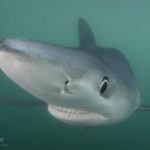
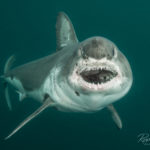
In recent years, I have been planning my trips around the larger animals like crocodiles, whales and especially sharks because they are under such pressure around the world from shark finning, commercial by-catch and shark fishing. A recent passion project of mine was to photograph salmon sharks in Alaska to learn more about them and increase awareness of their struggles. I first saw one in Southern California waters and it wasn’t until four years later that I was able to get my first pictures after multiple trips to Alaska.

Any favorite destinations?

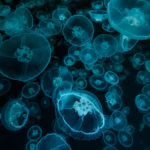
My answer changes over time but usually it is one of the recent places I have been. I really learned to appreciate California diving while living there for five years (after I got a good wetsuit and drysuit to stay warm). California has great marine diversity, including sea lions, sharks, tons of nudibranchs, kelp forests, and jellyfish. Keeping with the cold-water theme, I also love diving in British Columbia, Canada at God’s Pocket and Alaska where in addition to the elusive salmon shark, there are huge blooms of jellyfish, giant plumose anemone gardens, critters galore and salmon in the streams.

For warmer water, it’s hard to beat the marine diversity and healthy reefs of the Coral Triangle. For big-animal photography, it is hard to beat the consistently crystal-clear waters of French Polynesia, which are teaming with sharks year-round. And how can I forget the marine-protected waters of the Gardens of the Queen in Cuba, where pristine Caribbean reefs look the way they were 60 years ago, teaming with sharks and American crocodiles. For local diving, the up-close-and-personal mako and blue sharks of Rhode Island make for an action-packed photography trip.

What’s your underwater setup?

I recently upgraded from a Nikon D800 full frame DSLR to the Nikon D850 and absolutely love the 3D-focus mode speed and accuracy, the dynamic range and quality of the images captured on that sensor. For wide-angle lenses, I use the Nikor 16-35mm and 8-5mm circular fisheye lenses and for macro, I use both the 105mm and 60mm Nikor lenses. The camera is housed in Nauticam with a large 9-inch Zen glass dome port. My rig also sports two fast powerful Sea & Sea YS250 strobes for wide-angle big-animal action. For macro I switch to my Sea & Sea D2J strobes with a Retra LSD snoot and OrcaTorch 900V focus/video light.

Do you have any tips for new underwater photographers?

Other than the obvious — hone your dive skills before ever touching a camera — here are my top three tips!

Take an underwater photography workshop. Why struggle, trip after trip, trying to teach yourself how to use your new equipment and troubleshoot why your pictures aren’t coming out the way you want them to? You spend a lot of money on the equipment, travel and precious time off from work, so why not spend a few more bucks to reduce your frustration levels and accelerate your learning curve?

Know your gear inside and out before you ever get in the water. It is not the camera that takes the picture—it’s you. Read your manual and learn all the camera’s options, then experiment with them. Look online for underwater reviews and tips for your model. This will pay dividends on your trip and significantly reduce your learning curve.

Finally, don’t take yourself or your photography too seriously. Obviously, you need to be serious about the learning process if you want to improve. But don’t judge the quality of the dive or trip by the pictures you get. Some photographers get to be real sour pusses if they don’t get “the shot” and especially if someone else does. Have fun diving, taking pictures and enjoying the beauty of the underwater world. Work on your underwater photography skills. With time, your consistency and quality of images will improve and you’ll be ready to capture that one in a million opportunity when it appears.

By guest author Ron Watkins

For more of Ron Watkins’ work, please visit his website here, Facebook, or Instagram.


The post Photographer Spotlight: Ron Watkins appeared first on Scuba Diver Life.


from Scuba Diver Life https://ift.tt/2NmbqzF

Monday, September 17, 2018

Autism and Suicide: Reducing the Risk

Autistic people are at a high risk of suicidal ideation and/or dying by suicide. Research has found a 66% lifetime experience of suicidal ideation and a 35% lifetime experience of planned or attempted suicide. What steps can we take to help?

from The New Social Worker Online — the professional social work careers magazine https://ift.tt/2pexkqb

Sunday, September 16, 2018

Self-Care A-Z: Notorious RBG (Supreme Court Justice Ruth Bader Ginsburg) Builds a Case for Self-Care

RBG, the recent documentary about cultural icon Ruth Bader Ginsberg, is inspiring and instructive. Amongst many lessons, RBG’s life presents a self-care case.

from The New Social Worker Online — the professional social work careers magazine https://ift.tt/2NQsZHq

The Greatest Hits of the Galapagos Islands

“You’ve got to respect the place that you are diving. The Galapagos Islands are like nowhere else.”

So says Ruly Menoscal, the lead guide on my 10-day cruise aboard the Galapagos Master. And boy is he right — diving in the Galapagos is like an all-you-can-eat buffet of only your favorite dishes. There’s no throwaway coleslaw or potato salad here. On our trip, the closest we come to a so-so dive is our check-out in the harbor of San Cristobal, where there’s little coral and a sandy bottom without much to see — until two of the harbor’s resident sea lions join us in about 30 feet of water. After 20 minutes underwater, I’m hooked.

Only four of the 21 islands are inhabited, which leaves most of 3,093-square miles (8,000 square km) completely untouched. This makes for a raw, wild landscape and little to no run-off in the water. Even better, three ocean currents — the cold South Equatorial Current (the source is the Humboldt Current), the warm Panama Current, and the cold, deep Cromwell Current — converge in the Galapagos, creating arguably the world’s richest marine environment.

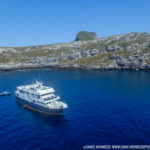
Now boarding the Galapagos Master
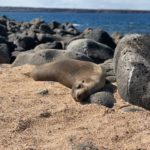
I meet the other divers for my cruise at the small, easily navigable airport in San Cristobal. There’s excited chatter in several languages on the bus to the harbor — there are Germans, Swiss, English, French and Canadian divers on board — in fact, I’m the only American. On our stroll down the pier, the sound and sight (though maybe not the smell) of at least 100 sea lions, lolling on the harbor rocks delights me. After a short ride out, we board the waiting boat.

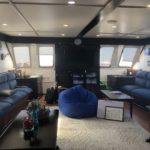
There are 12 staff onboard, including our chef Angel, pretty much always my favorite crewmember. Our guides Raul (who goes by Ruly) and Jimmy have been on the boat for varying amounts of time. Guides here are freelancers, moving from boat to boat, working a few weeks on, a few weeks off. Each of ours has thousands of hours underwater in the islands though, so we’re in good hands. We take a quick look at the dive deck before heading inside the boat, first through the dining area and then past a large camera station, and finally into the salon, occupying the bow of the boat. Wide, comfortable looking blue banquettes and a few comfy-looking beanbag chairs beckon, but first it’s downstairs to check out my cabin.

There are four cabins on the lower deck and four on the upper deck, and mine is more than roomy enough. I’ve got no roommate, so I use the extra twin bed for storage and guiltlessly claim every hanger in the armoire. After unpacking — tip: bring more comfy clothes than you think you’ll need — we head upstairs for a short tour before the boat briefing. On the upper deck, occupying the aft of the boat, is a large, shaded seating area, with even more beanbags and comfy couches. Up one more level is the sun deck where I find — you guessed it — more beanbag chairs, a cocktail bar, and a fantastic 360-degree view. No time to enjoy it yet, though; first it’s time for the boat and dive briefings.

Each day except the first two will feature three or four dives; today we just had time for our checkout, and tomorrow we’ll dive once in the afternoon after an island walk. I’m equally excited for both and head downstairs early to get some sleep for what’s sure to be a full day.

North Seymour Island
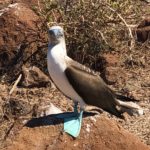
Divers on Galapagos liveaboards are allowed two visits to land: we use our first the next morning on North Seymour Island, a small, uninhabited spot that’s positively bursting with life. A few hours’ nature walk along a signposted route (leaving the path is not allowed) introduces us to iconic blue-footed boobies, nesting frigate birds, sunbathing iguanas and dozens of sea lions, from small pups to burly bulls.

Although there is some tree cover on North Seymour, the landscape of the islands themselves is generally stark. It’s all volcanic rock, with little tufts of greenery and patches of low trees. There are no big land mammals in the Galapagos; there’s simply not the environment to support them. But the animals here — and there are many — have thrived since the islands became a protected national park in 1959.

After completing the loop path and snapping dozens of pictures, we’re heading back to the boat for our first “real” dive. As we’re leaving, a few more groups of tourists arrive for walks of their own. One of them asks me if it’s worth it, to which I chuckle softly and reply, “Oh yes. Yes, it is.”

Diving in Galapagos
As Ruly said from the get-go, you’ve got to respect the place you’re diving. Marine life in Galapagos is spectacular, but you’ve got to earn it with potentially challenging conditions, so I follow the briefing closely, admittedly a little nervous about back-rolling with a negative entry into potentially strong current. On our trip, we’ll have up to 27 dives, including two full days each at Darwin and Wolf Islands, followed by days at Isabela, Fernandina, Cabo Marshall and Cousins Rock.

Although the boat can easily accommodate 16 divers, our group is small at 12, so we split into two groups of six. We dive via two pangas, taking turns going first; always at the same dive site but never crowded together.

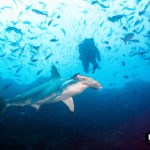
We gear up and get ready for our first “official” dive in the Galapagos in the channel between tiny Mosquera Island and Baltra near North Seymour. After 50 minutes underwater, I’m filled with awe. We drop down on some sloping boulders that front a nice sandy patch and almost immediately there’s a small school of scalloped hammerheads along with a giant blacktip shark. There are countless turtles, giant schools of fish, eagle rays, scalloped hammerheads, the blacktip, turtles —sometimes all at the same time. We drift along with the boulders to our right and level up from 70 feet to about 50 where the current catches us. Up and over the boulders we go, flying along in about 12 feet of water on an extended safety stop.

Once we’re all back onboard, it’s time to begin the overnight journey to the legendary Darwin and Wolf Islands, where there’s simply too much to cover here. Stay tuned for another story focusing exclusively on these legendary dive sites.

Dive, dive, dive
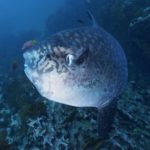
After four full days at Wolf and Darwin, we move on to our next site, Punta Vicente Roca, off the northwest coast of seahorse-shaped Isabela Island. It’s the largest in the island chain, formed by six active volcanoes. The site sits right on the seahorse’s lower jaw. Unfortunately, however, I’ve developed a cold overnight and can’t clear my ears for the dive, which will be relatively deep and involve a search for the site’s iconic residents — mola mola.

I’m gutted, but my panga driver Javier graciously putters me around the bay while the divers are down, looking for tell-tale signs of molas at the surface. We luck out and spot a few, so I slip as quietly as possible into the water to get a peek. I’m rewarded with brief glimpses of these famously shy fish before they disappear into the deep. Not to be outdone, the bay’s resident sea lions come to play with me on the surface as well. They dive-bomb and twist around me, matching their play with my own level of enthusiasm. For a non-dive day, I couldn’t be happier.

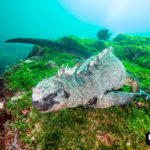
Next up is Cabo Douglas, home of another famous Galapagos resident: marine iguanas. These ingenious, endemic reptiles have figured out that the algae encrusting the boulders just offshore is a fantastic food source. Each day at mid-morning, after the sun has warmed the chilly water a bit, they slip beneath the surface to munch on the algae below. They grip the rocks with their strong claws, spending up to 40 minutes underwater to feed before coming up for a gulp of air and submerging again.

“It’s a 40-minute safety stop” says Ruly of the site, where divers will spend as long as they can in chilly water only 10 to 15 feet deep (3 to 5 m). And I’m lucky that it is, because my ears still aren’t cooperating. “They’re feeding, so don’t disrespect them,” says Ruly, right before we roll into the water. I hover on snorkel above the eating iguanas, nearly as close as the divers below, who’ve been told to maintain a 5-foot (1.5 m) distance. The iguanas are nonplussed by our presence, rising to the surface and cruising back to the shore like surfers gracefully riding a wave when they’re done with their meal.

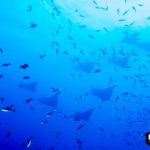
We spend our final dives of the trip at Cabo Marshall to see mantas and Cousins Rock, famously a photographer’s dream site for sheer volume of life. My dive trip is over, however, and I’m relegated to snorkel. I’m simultaneously happy for excited divers emerging from the water and jealous that I wasn’t with them. My unfortunate cold has mostly, however, strengthened my resolve that I must return.

Life aboard the Master

As with all liveaboards, we fall into an easy rhythm on the Master. We wake, eat a light breakfast, dive, eat a full breakfast, dive, eat lunch, have a nap and a snack, dive, and eat dinner. Repeat. If there’s a diver in the world who doesn’t love a routine like that, I haven’t met him. Most of the guests spend the afternoon on the upper deck, filled with comfy chairs and couches and exposed to the air but thoughtfully covered to keep the sun at bay. As we move, frigate birds fly alongside the ship, gracefully gliding in and out of the breeze and alighting on the bow when we stop.

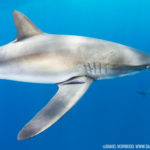
Silky sharks join us as well, showing up just downstream of the galley shortly after we anchor. Slowly undulating in the water below, they’re almost as excited for meal times as we are when the galley flushes out organic waste. Aside from our final land excursion in Santa Cruz and our walk on North Seymour, we don’t see another soul for 10 days, either on the islands or on a dive site — and it’s simply glorious.

Tortoise time on Santa Cruz
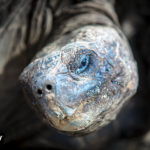
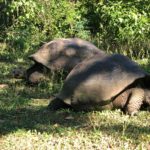
On our final day, we make the second land excursion to Santa Cruz. It’s by far the busiest island in the Galapagos with a population of around 12,000. We’re meant to go to the Darwin Research Station to see giant tortoises, but instead detour to Rancho el Manzanillo, a privately-owned farm where dozens of tortoises roam free. Ruly gives us a brief talk in the onsite restaurant about the tortoises’ ecology and history and guides us on a short walk before turning us loose to wander the paths and forested area in search of giant tortoises on our own.

I happen upon a pair munching quietly in the shade and settle in near a tree to watch them, remaining as unobtrusive as possible. Despite their size, they spook easily and do not care for close human contact. After about an hour, it’s time to head back to the boat and begin the journey back to San Cristobal, from where we’ll disembark the next day.

Details

With eight cabins, the Galapagos Master can accommodate 16 guests. Cruises are either seven or 10 nights; longer itineraries get two full days at each Darwin and Wolf Islands. You’ll want to be nitrox certified before you go, as there’s no training offered on board. Make sure you’re comfortable in potentially strong currents as well — bring an SMB and know how to use it. 

How to get there:

To reach the Galapagos Master, you’ll initially fly into either Quito or Guayaquil; plan on an overnight in whichever city you choose the night before your flight on to San Cristobal. If you book your domestic flight directly with Master Liveaboards, a company representative will meet you at the airport before your flight to San Cristobal to walk you through the process. In Quito there’s a separate check-in area for the Galapagos where they’ll screen your bags and attach green zip-ties once they’re through. You’ll then proceed through security as usual.

On arrival in the Galapagos you’ll pay a $100 national park fee (in cash) before boat representatives whisk you away for the trip of your dreams.

When to go:

There’s no bad time of year to go to the Galapagos; it just depends on what you most want to see. The most popular time of year understandably is whale-shark season, from June through November. During this time divers can see up to a dozen whale sharks on one dive at Darwin’s Arch. It’s not impossible to see these giants at other times, however; I visited in April and saw them on three separate dives. This season brings cooler water conditions, so plan accordingly.

From December through May the water is warmer, typically from 78 to 82 F (25 to 27 C), and there are more mantas, and other rays, around Wolf and Darwin Islands. This is typically the best season to see the iconic “wall of hammerheads” at Wolf Island as well. I was there in May, however, and the water was slightly colder, topping out at 75 F (24 C) and cooler at depth. Although we didn’t see mantas, we did see whale sharks and tons of hammerheads.

The post The Greatest Hits of the Galapagos Islands appeared first on Scuba Diver Life.


from Scuba Diver Life https://ift.tt/2D2m9dP