Tuesday, November 27, 2018
Building bridges between newsbrands and the people

from World News Publishing Focus by WAN-IFRA - World Association of Newspapers and News Publishers https://ift.tt/2E17kbf

Sunday, November 25, 2018
Bling It On with a Pre-Made Holiday Promotion

Did the holidays arrive before you had a chance to put together a promotion? BeautyMark Marketing offers stylish, professionally crafted, agency-quality marketing at a small-business price. Seasons and holidays are at the heart of a successful salon marketing calendar. When done right, coordinated salon promotions can generate a steady flow of guests.
Email, Social Media and Banner $350
Click HERE to view our collection of Pre-Made Promotions >>
Get agency-quality marketing at a small business price. We offer stylish, professionally crafted promotions pre-designed by the beauty experts at BeautyMark Marketing. Reap the rewards of our beauty expertise and professionally crafted marketing plan with monthly promotions.
holiday marketing, holiday marketing for salons, holiday salon marketing, holiday merchandising, holiday gift card sales, salon business, salon client selfies strategy, salon digital marketing agency, salon holiday marketing, salon promotion for holidays, salon promotions for december, salon promotions for holiday, social media marketing holiday marketing, holiday theme, holiday marketing ideas, salon holiday marketing, salon holiday campaigns
from Beauty Business Blog https://ift.tt/2TFVQym
Dive Profile: PT Hirschfield
Australian diver, oceanographer and award-winning underwater photographer PT Hirschfield has incurable recurrent endometrial cancer. But it hasn’t stopped her from pursuing her passion underwater. She was a recent guest on the Blunt Report podcast where we discussed her cancer, as well as what keeps her enamored with the underwater world.
“I actually vomited for my first 60 dives,” Hirschfield said when explaining how she had little attraction to diving in the first place. Her first dive simply came about as a romantic idea for a couple to do on the Great Barrier Reef. Ironically, her future passion became a solo pursuit when her husband became incapacitated with seasickness.
Almost 1,000 dives later, this genesis moment must seem like a lifetime ago. Her diving career now encompasses thousands of photographs and videos, with her work featured by the likes of BBC’s “Blue Planet”, National Geographic and the Dodo. She also won the award for the Australasian Underwater Photographer of the Year in 2018.
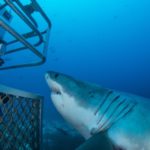
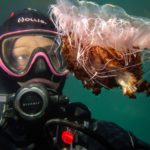
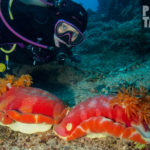
Struggling with health issues
While these accolades alone put her into a category that includes some of the world’s most prestigious oceanographers, Hirschfield has faced devastating health issues that make her relationship with the ocean even more meaningful. In 2014, after several reoccurring diagnoses and lengthy treatments, medical staff declared that she had an inoperable, grapefruit-sized tumor and that any further treatment would only buy her time. Yet, through the many surgeries, Hirschfield used her love for the ocean to keep her spirits high. The light at the end of the tunnel, for her, was getting back underwater.
Making the most of her time
Though many would crumble in the face of this diagnosis, Hirschfield took the opposite track. “You do start to process the whole issue of mortality at a very intimate level,” she said, adding that the fact she will eventually pass away makes her no different to anyone else, except that she doesn’t have the luxury of denial. Not only does Hirschfield draw on the ocean as a source of power and motivation, she also reflects on the constant struggles between life and death that a diver witnesses on a day-to-day basis. From the very top of the predatory apex to the deepest of the bottom dwellers, the ocean is a testament to the fact that death is just as much a part of life as life itself. She has found peace in the raw and untamed power of the natural world, accepting it for all that it is; both beautiful and fierce.
Now, through numerous conservation projects, photography and with the use of her voice, Hirschfield has dedicated her existence to giving back to the ocean that has given her so much. As she says on her blog: “As far as I know, everyone is going to die sometime (I just don’t have the luxury of denial). So, we may as well all make the most out of the days we have rather than lament the ones we don’t, right?”
By guest author Konner Blunt
The post Dive Profile: PT Hirschfield appeared first on Scuba Diver Life.
from Scuba Diver Life https://ift.tt/2PWKDeN
Friday, November 23, 2018
Technical-Diving Equipment Configurations
You can typically spot technical divers at a dive site or on a boat because they will be the ones with more equipment than anyone else. Further, technical-diving equipment configurations differ substantially from recreational diving. Here we’ll look at the differences between twinsets/doubles and sidemount diving.
Twinset diving
Twinsets or doubles have been classically associated with technical diving and most technical divers have trained using them. Many instructors and training agencies use what is called a ‘Hogarthian set up.’ Named after cave diver William Hogarth, it emulates the DIR — Doing It Right — philosophy of technical diving. That means it’s minimalist while also ensuring that divers have backed up every piece of life-saving equipment.
As you’d expect for a twinset configuration, there are two tanks, often the same size as recreational divers’ tanks. The tank valves are connected via a manifold, a type of bridge valve that allows divers to access gas from both tanks through either side’s regulator. Each valve has a first stage attached. On the right, this first stage connects to a 7-foot (2.1 m) hose with a second stage and an LPI inflator for the wing. On the left, the first stage connects to a second stage on a standard-length regulator hose. The diver uses an attached necklace to place the regulator around his neck. There’s also an SPG hose and any inflator hoses for drysuits.
Why is one of the hoses over 6 feet (2 m)? This goes back to overhead-environment diving, where divers may have to exit behind each other in an out-of-gas situation. The diver with gas would donate the long hose to the victim, using the back-up regulator on the necklace for themselves. In this way, they can exit single file by swimming behind each other.
A wing and harness with backplate holds everything together. Wings come in different shapes and sizes, but most importantly they must provide enough lift for the amount and type of tanks the diver is using. Divers can choose between having a single bladder in their wing or a second one to use in case the first one fails. Classic harnesses are made of a single piece of weight-belt webbing plus a crotch strap. They are fitted with D-rings to provide attachment points for regulators and other gear.
The goal is to achieve stability, allowing the diver to control the twinset and potential stage tanks underwater, effectively turning the twinset into a platform from which the diver is suspended.
Sidemount diving
Sidemount, on the other hand, is more about flexibility, allowing divers to attach and remove tanks underwater when necessary. This configuration has become hugely popular within technical diving — some even call it a fad. We can trace the origins back to U.K. sump diving, where divers maneuvered through restrictions too small for twinsets, sometimes even small enough that they had to remove their tanks and push them through the restriction ahead of their body. Sidemount is still closely associated with cave diving, although depending on the size of the cave, twinsets may be just as suitable.
For sidemount configuration, divers mount tanks at their side rather than on their back, starting at the armpit and ending below the hips. Tanks connect to the harness with a cam band or jubilee clip attached to the lower part of the tank and equipped with a bolt snap. Tank valves remain in place on the diver’s body with bungee cord, typical for aluminum tanks, or a combination of bungee and clips, more typical for steel tanks.
Twinset and sidemount differences
One of the main differences between sidemount and twinset diving is the degree of standardization. Twinset configurations are highly standardized whereas sidemount configurations are not necessarily. This has to do with sidemount history as a means to an end initially, which gradually developed into a full-fledged diving configuration. Divers in sidemount courses will learn a variety of setups but will have to spend time to perfect their own.
As a consequence of sidemount flexibility, different divers might also set up regulators differently. Most sidemount divers prefer regulators with swiveling first stages to allow flexible hose movement. They usually prefer a fifth low-pressure port as well, allowing them to mount hoses at a 90-degree angle. Sidemount divers can also configure regulators by largely following the twinset configuration described above. This means having a first stage, long hose and second stage with an SPG on the right side and a first stage, short hose, second stage with necklace, inflator hose and SPG on the left side.
Harnesses, hoses and bladders
Many sidemount harnesses invert the corrugated inflator hose, meaning it runs from under the diver’s left arm across their upper body rather than over the left shoulder. This is to keep as low a profile as possible in order to navigate restrictions. This is where the fifth low-pressure port comes in handy, allowing divers to install a short inflator hose across the body rather than over the shoulder.
Speaking of hoses, sidemount SPGs are usually mounted on 6-inch (15 cm) high-pressure hoses, as longer hoses are not practical and can become an entanglement hazard. Inflator hose lengths vary according to diver size and configuration.
Sidemount harnesses and bladders come in many shapes and sizes. Most are adjustable to fit different-sized divers, but some come in size ranges. Which one works best will depend on your size and the type of sidemount diving planned. Just like with twinset wings, it’s important to pick one with sufficient lift for the tanks. For example, those who want to do recreational sidemount dives with no more than two tanks will find that a small, super-streamlined harness will be enough. Technical dives with more tanks will require more lift capacity.
Most tech divers start their journey in either of these open-circuit configurations. Rebreathers add another option — take a look at this post for the basics. Paramount for safely diving in either configuration is instruction by a qualified teacher. Sidemount especially may not look that different from other configurations, but the devil truly is in the details. If you get it wrong, comfort, streamlining and trim — some of the main reasons to dive sidemount — are all compromised. Technical-diving configurations may seem intimidating, but with the proper knowledge, they open up a whole new world underwater.
The post Technical-Diving Equipment Configurations appeared first on Scuba Diver Life.
from Scuba Diver Life https://ift.tt/2QeBYDr
Wednesday, November 21, 2018
Marine Species: Flamboyant Cuttlefish
One of the smallest yet most colorful of its species, the flamboyant cuttlefish lives up to its name.
Getting to know flamboyant cuttlefish
Native to the Indo-Pacific region, the flamboyant cuttlefish is quite small when we compare it to other cuttlefish, growing up to only 3 inches (8 cm). This is the only species of cuttlefish that’s known to crawl on the seafloor instead of swimming gracefully like others. It also has a very robust aspect, unlike some other species.
Flamboyant cuttlefish enjoy muddy and sandy sea floors and divers can see them both during the day and at night. They hunt for crabs, shrimp and small fish using tentacles with suckers to capture their prey.
Vibrant color patterns
As their name suggests, heir most distinctive feature is their color pattern. When attacked or disturbed or when they are stalking a prey the flamboyant cuttlefish changes from its normal dark brown color to show patterns of white, brown, red and yellow that can be truly mesmerizing. They can also change the shape of their body and texture of their skin as part of their camouflage skills. The animals begin using these techniques as soon as the eggs hatch, so even juveniles can use this ability. They also use the changes in color to mate or to threaten other cuttlefish if they feel intimidated.
They are also the only species of cuttlefish that is toxic to humans, as their meat contains toxin.
Once the male fertilizes the eggs, the female deposits them in crevasses, under rocks or in coral so they are protected from predators. Once the eggs develop, they become translucent, making it possible to see the tiny cuttlefish inside. When they hatch, the juveniles are independent immediately.
Seeing flamboyant cuttlefish
These cuttlefish are active both during the day and at night. Their small size can make them difficult to spot but they are quite slow-moving so once you have found one, there’s plenty of time to observe its behavior or snap a few pictures. Divers can spot flamboyant cuttlefish around the Indo-Pacific, particularly in Indonesia and the Philippines.
The post Marine Species: Flamboyant Cuttlefish appeared first on Scuba Diver Life.
from Scuba Diver Life https://ift.tt/2QaytxT
Tuesday, November 20, 2018
What I’m reading: Vol. 106.

Hello my darlings,
I have baking to do and family heading to town, so I’m taking a few days off to focus on that!
Happy Thanksgiving to all those who celebrate. I’ll be back soon…and I have some really exciting things to share with you after the holiday!
xoxo,
Becky
What I’m reading:
The Magicians by Lev Grossman. I’ve heard such good things about this series but hadn’t ever gotten around to reading it until now! I’m excited to dive in.
From Duke ’till Dawn by Eva Leigh. Because I’m never not reading a romance novel. I love this author.
Internets:
This post from The Court Jeweller on The Swedish Malachite Parure is definitely worth a look.
This Fairytale Cottage Is Made Entirely of Chocolate and You Can Spend the Night.
Giant Wooden Trolls Make Mischief in an Enchanting Outdoor Museum.
A Fantastic Recreation of a Renaissance Cabinet of Curiosities.
GEMFIELDS introduces ‘Inkalamu’, the 5,655 carat Lion Emerald.
15 Important Women in History You May Not Have Heard of.
The Enchanting History of Notre-Dame Cathedral’s Famous Gargoyles. I have a thing for gargoyles.
This post contains affiliate links.
The post What I’m reading: Vol. 106. appeared first on Diamonds in the Library.
from Diamonds in the Library https://ift.tt/2BnyUgg
Monday, November 19, 2018
Best Wreck Diving in the Caribbean
In the fifth of our six-part series on the world’s most dive-able wrecks, we’re highlighting the best wreck diving in the Caribbean. (Check out our stories here on wreck diving in Asia, Africa, the Middle East and the United States). Each Caribbean wreck has a unique story — from the vessel confiscated for drug smuggling to the ship that became an underwater art exhibit — read on to find out about the best wreck diving in the Caribbean.
Hilma Hooker
Where: Bonaire
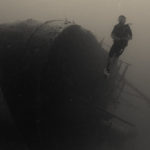
Customs officials found nearly 12 tons of marijuana hidden on the Hilma Hooker in 1984. The vessel had lost power and was towed to shore where the inspection revealed the illegal cargo. Officials arrested the captain and crew members and the vessel remained moored at the pier. The ship was in poor condition and began to take on water. Officials decided to move it to a permanent anchor point between two reefs where it subsequently sank.
The vessel lays on its starboard side. At the stern you can see the rudder and propeller. There’s also a large deck, two deck houses, a galley, crew quarters, wheelhouse, chart room and an empty cargo hold. The ship was evidence in a criminal case, which means that nothing was removed from the vessel prior to sinking. Some objects like furniture, debris and heavy steel doors make penetration hazardous. Wreck-certified divers should take particular care due to number of entanglement hazards, low visibility and a lack of natural light.
The wreck lies between 49 and 100 feet (15 to 30 m) and visibility is often more than 100 feet. Water temperatures vary from 79 to 89 F (26 to 32 C). Open-water divers can dive the Hilma Hooker but you’ll need wreck certification to penetrate the wreck. The best way to visit the wreck is via boat charter from one of the island’s dive resorts. Bonaire has good diving all year round.
The Odyssey
Where: Roatan, Honduras
The Odyssey is a 295-foot-long (90 m) freighter, sunk in 2002. It is the largest wreck in the Caribbean. Divers can see a huge wheelhouse, many stairs and ladders, and the captains’ head with original tiling still intact. The wreck lies between two reefs, home to many tropical fish. You can see some barracuda, groupers and tuna above the wreck. Although the wreck is still fairly new there is some coral growth visible.
The Odyssey lies between 40 and 112 feet (12 to 34 m) and visibility ranges from 82 to 88 feet (25 to 27 m). Water temperatures vary from 75 to 84 F (24 to 29 C). The wreck is best for advanced divers and the best way to reach it is via a short boat ride from shore.
The best months to visit are April and May when the weather is warm and dry. The rainy season is between July and January with the peak rainy season being between October and January.
Kittiwake
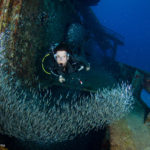
Where: Grand Cayman, Cayman Islands
The Kittiwake was a submarine-rescue vessel, launched in 1945 and decommissioned in 1994. and many of its exploits are still classified. It played a part in a number of record-breaking achievements, including conducting the deepest submarine rescue exercise in 1959. The Kittiwake crew recovered the Challenger’s black box from the Atlantic Ocean in 1986 after it exploded.
The vessel was donated to the Cayman Islands Tourism and it was scuttled in Grand Cayman in 2011.
The Kittiwake has an abundance of marine life, including a huge resident grouper that hangs around the propeller. Divers can explore the mess-hall and the large propeller shafts, with lots of natural light for easy penetration. Don’t miss the smoke stack, two recompression chambers and a head with the mirror still intact.
The Kittiwake lies between 16 and 60 feet (5 to 18 m) and visibility is usually over 100 feet (30 m). Water temperatures range from 77 to 84 F (25 to 29 C).
Open water divers can dive the Kittiwake but advanced certification with wreck qualifications are required for penetration. There is good diving year-round but note that hurricane season falls from June and November. The Kittiwake is a private park so you must pay an admission fee and visit the site with a licensed operator.
Felipe Xicotencatl C-53
Where: Cozumel, Mexico
Also called “the Cozumel wreck,” the Felipe Xicotencatl served in the U.S. Navy in WWII as the USS Scuffle. Mexico bought the vessel in 1962 and used it to patrol the Caribbean for 55 years. The government purpose-sank the Felipe Xicotencatl in 1999 as part of the Cozumel underwater park. There’s a large diversity of marine life and divers can explore the engine rooms, galley, officers’ quarters and radio room, all of which are still intact.
The wreck lies between 20 to 82 feet (6 to 25 m) and there can be strong currents at times. Visibility is usually over 100 feet (30 m) and water temperatures range from 77 to 84 F (25 to 29 C).
Open-water divers can dive the wreck though you need advanced and wreck qualifications for penetration. There is good diving year-round in Cozumel with May to October being the rainy season. The wreck is accessible via boat.
RMS Rhone
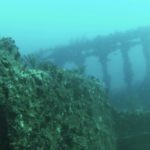
Where: British Virgin Islands
The RMS Rhone was a British mail ship. It sank during the San Narciso hurricane of 1897 when winds pushed into Black Rock Point on Salt Island. The wreck cost 123 passengers and crew their lives.
Today, the Rhone is one of the BVI’s most well-known dive sites. The bow is mostly intact and in the stern you can see the propeller, drive shaft and engine box. Most of the wreck is exposed, which means it is fairly easily penetrable.
The stern lies between 39 and 60 feet (12 to 18 m) while the bow sits between 72 and 85 feet (22 to 26 m). Visibility is usually over 100 feet (30 m) and water temperatures range from 79 to 84 F (26 to 29 C).
Divers can visit with only an open water certification but must be wreck certified to penetrate the wreck. Because part of the Rhone is so shallow, it is a perfect spot for snorkelers.
Diving is good year-round but note that hurricane season falls from June 1 to November 30. Both liveaboard and day trip options are available for this wreck.
Suffolk Maid
Where: Butler Bay, St. Croix, U.S. Virgin Islands
One of the three ‘Shallow Wrecks’ in Butler Bay, the Suffolk Maid was a 144-foot-long (44 m), steel-hulled North Sea trawler. A hurricane drove the ship onto the Frederiksted Pier during a hurricane in 1984. The next year the vessel was towed and scuttled at its present location in Butler Bay. It sits upright. Divers will see the vessel’s name, clearly visible on the bow. There are many Creole wrasse, reef fish and the occasional green moray.
The ship lies at 60 feet (18 m) and visibility is usually over 100 feet (30 m). Water temperatures range from 79 to 84 F (26 to 29 C). There’s a slight current on the wreck most of the time.
Divers can visit with only an open-water certification but must be wreck certified to penetrate the wreck. Diving is good year-round but note that hurricane season falls from June 1 to November 30. It’s best to dive the site via boat.
Bianca C
Where: Grenada
The Bianca C is also called the ‘Titanic of the Caribbean’ due to its vast size. The wreck is 590 feet (180 m) long and sits upright on its keel. The former cruise liner was owned by the Italian Costa Line but an explosion in the boiler room in 1961 led to the ship’s ultimate demise and the death of one crew member, as well as injuring eight more. After the explosion, fishermen from nearby St. George’s rushed out to help the roughly 700 passengers and crew as the ship burned at anchorage. Fire quickly spread throughout the vessel, which was towed around three miles away, a mile from the popular Grand Anse beach.
Divers can see the collapsed funnel with the ‘C’ for Costa Line still visible, lifeboat davits, and the swimming pool. The bridge has collapsed but from there you can see the fore deck with broken stairs, winding winches and fallen spars all covered in soft coral. You can also see the remains of the forward mast.
A variety of tropical fish and barracuda often hang around, as well as blacktip and the occasional bull shark. You may also see eagle rays and nurse sharks.
The wreck lies in 100 to 164 feet (30 to 50 m) and the current usually runs from medium to strong across the ship.
Divers will need an advanced qualification and wreck certification for penetration. Diving is good year-round but note that hurricane season falls from June 1 to November 30. It’s best to dive the site via day boat.
Kodiak Queen
Where: Necker Island, British Virgin Islands
The Kodiak Queen is one of only five vessels that survived the Pearl Harbor attack. After WWII it went on to become a king crab fishing vessel running out of Kodiak, Alaska. In 2012, the efforts of historian Mike Cochran, photographer Owen Buggy and entrepreneur Richard Branson saved the ship from the junkyard. Today it rests just off of Richard Branson’s private Necker Island. The shipwreck has become an underwater art exhibit with the main feature being a huge Kraken sculpture wrapped around the vessel.
The ship lies in 56 feet (17 m) of water and the visibility is usually over 100 feet (30 m). Water temperatures range from 79 to 84 F (26 to 29 C).
Divers will need an advanced qualification and wreck certification for penetration. Diving is good year-round but note that hurricane season falls from June 1 to November 30. Divers can reach the wreck via shore-based excursions.
Superior Producer
Where: Curaçao
The Superior Producer was overloaded with Christmas cargo and sank soon after it left port at Willemstad on the way to Venezuela. The vessel sits upright and is covered with a variety of colorful sponges and coral. Barracuda and blackbar soldierfish are often hiding among the wreck.
The ship lies at 100 feet (30 m) and often has over 100 feet (30 m) of visibility. There are strong currents at times as well. Water temperatures range from 79 to 84 F (26 to 29 C).
The wreck is best for experienced, advanced divers with wreck certification for penetration. Diving in Curaçao is good year-round, with the rainy season falling between October and February.
Divers usually reach the shipwreck via a shore entry and a 5- to 10-minute surface swim.
SS Antilla
Where: Aruba
The SS Antilla was a 400-foot-long (122 m) German freighter. On the day that Germany invaded Poland during WWII, the ship sailed from a safe bunker in Cartagena toward neutral Curaçao but changed course for Aruba en route after learning that the harbor at Willemstad was already full of German ships. After interception by Royal Navy ships, the crew scuttled the Antilla to avoid its capture.The wreck is covered in sponges, fire coral, anemones, yellow frogfish and other tropical marine species.
The ship lies in 60 feet of water (18 m) and visibility often exceeds 100 feet (30 m) There are strong currents at times and water temperatures range from 79 to 84 F (26 to 29 C).
The wreck is best for experienced to advanced divers with wreck qualifications for penetration. Diving in Aruba is good year-round, with the rainy season falling between October and January. The best way to access the wreck is via day boat from a dive shop.
The post Best Wreck Diving in the Caribbean appeared first on Scuba Diver Life.
from Scuba Diver Life https://ift.tt/2Q5WEgR
Subscribe to:
Posts (Atom)